
A Robotics Showcase That Surpassed Expectations
December 16, 2025
What began as a modest end-of-semester showcase quickly turned into a powerful moment of affirmation for students, teachers, and families. Building on the foundation of Fremont Christian School’s inaugural robotics program earlier this year, the showcase offered a firsthand look at how far students across elementary, junior high, and high school have come in just one semester. Parents arrived expecting a simple display of robots and left impressed by how thoughtfully students explained what they had built—and why it worked.
Learning Through Curiosity, Not Grades
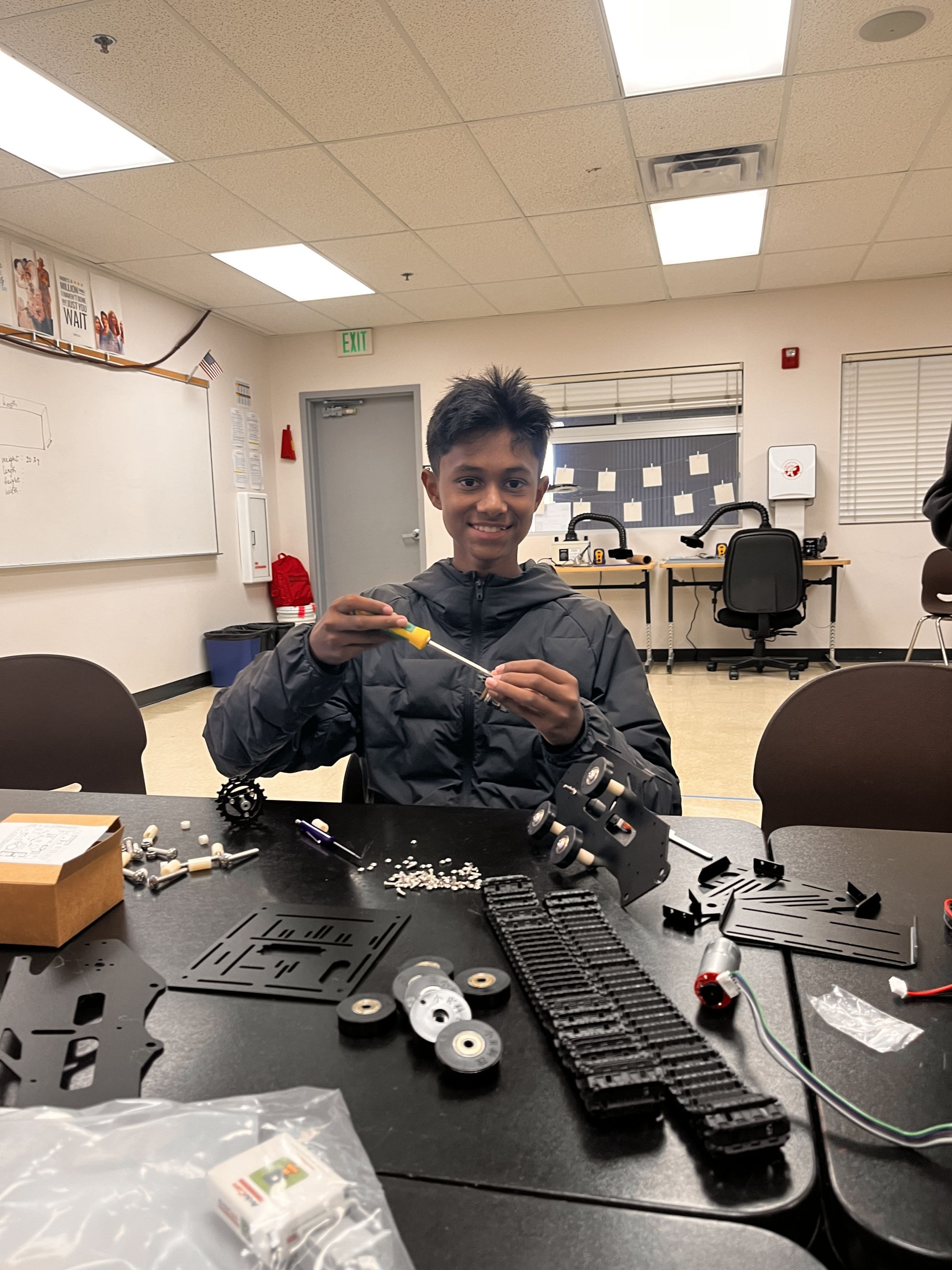
One of the most striking aspects of the robotics program is what isn’t part of it: grades. According to the program’s co-instructor Mrs. Mathews, removing that pressure allowed students to take risks, collaborate naturally, and focus on problem-solving rather than outcomes. Students returned week after week eager to improve on their previous designs, driven by curiosity instead of competition. “They didn’t want rewards,” Mrs. Mathews said. “They were just playing—and while playing, they were learning.” That freedom created an environment where experimentation and failure were not only allowed, but encouraged.
Confidence Built Through Collaboration
Across all age groups, robotics became a space where students supported one another in meaningful ways. Mathews observed that even students who typically struggled academically or socially began to thrive when working as part of a team. She recalled how one younger student, usually reserved in the classroom, gained confidence as he tested ideas and solved problems independently. High school students showed similar growth, collaborating closely to build a functioning robot far earlier than expected—and far more quickly than students at schools with the same program. The process reinforced communication, leadership, and trust—skills that extended beyond the robotics lab.
Parents attending the showcase were also surprised at how much their children had learned through what seemed like an advanced playtime. “They didn't expect the program to be as intense as it was,” said Mrs. Mathews. For example, many parents thought the elementary students were merely putting together pre-fabricated Lego robots. But then they heard the students responding to the instructor’s questions. “He was talking about friction, force, and other such concepts, and even third graders could answer the questions, because they’d learned through hands-on play and experience.”
Students Discovering New Interests & Skills
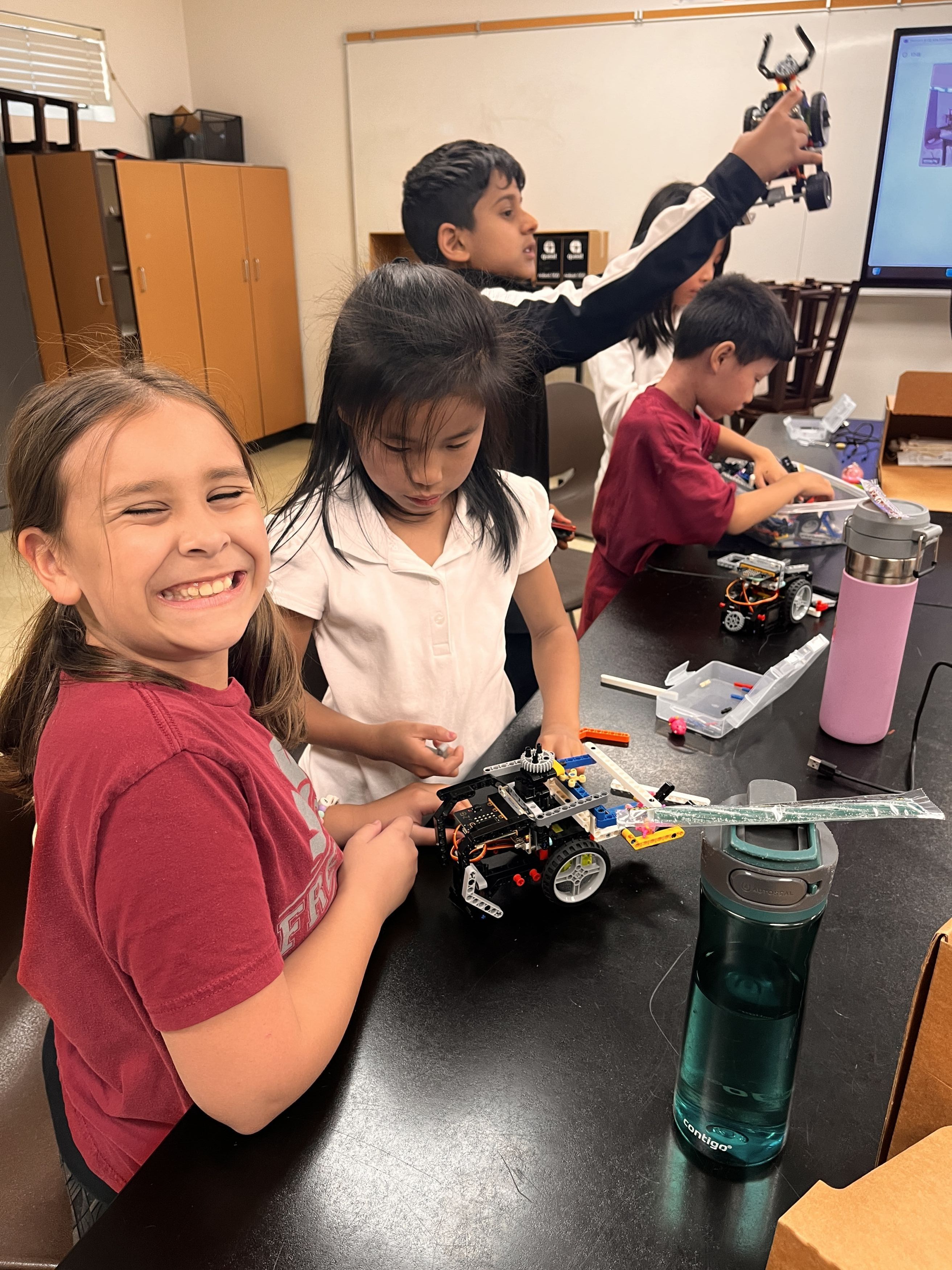
For many students, the after-school program introduced subjects they had never explored before. “Robotics helped me open up to a whole new topic that I was never exposed to,” said Ethan Wu, who pointed to learning step-by-step building and 3D printing as highlights of the program. Younger students expressed their excitement in simpler terms. “Using your brain to make Legos go forward with your partner was amazing,” said Beniah Idhida. Across grade levels, students found satisfaction in persistence, creativity, and hands-on problem-solving.
Building a Strong Foundation for What’s Next
With the first semester complete, the robotics program is already looking ahead. Now that students are comfortable experimenting, collaborating, and troubleshooting, future sessions will introduce more advanced tools and techniques, including soldering and expanded 3D printing. For Mrs. Mathews, the ultimate goal is confidence. She hopes students leave with the understanding that they can learn unfamiliar skills, adapt to challenges, and approach technology without fear—an outcome that matters far more than any single robot.
Posted in
Academic Highlights